
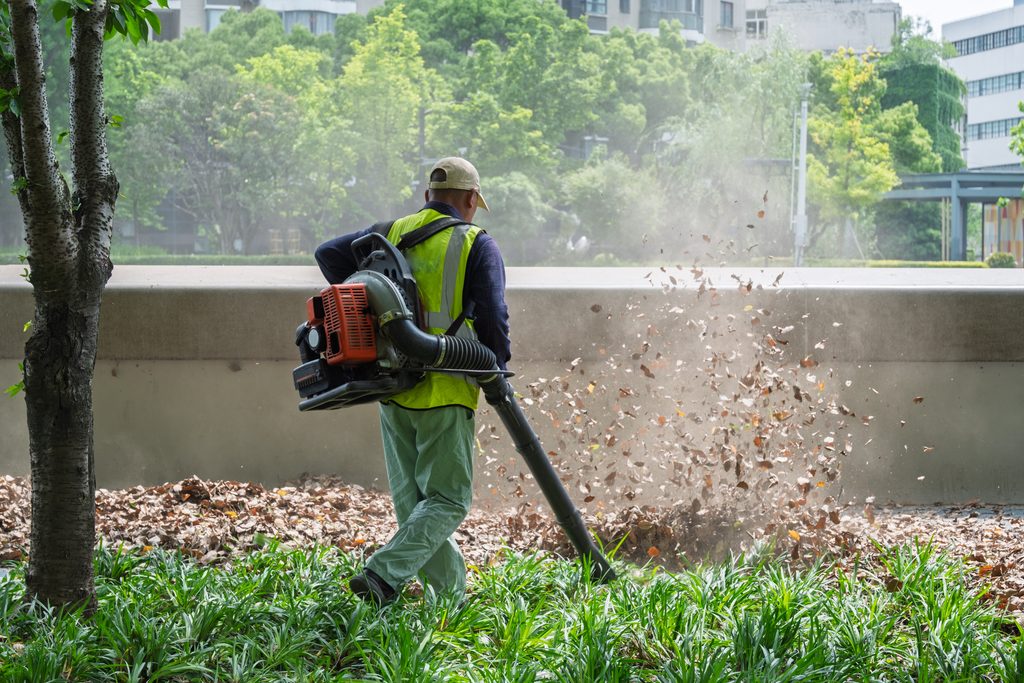
Each fall, mature trees across Western Pennsylvania and Eastern Ohio can cover commercial properties with heavy layers of leaves. If those leaves remain on turf, walkways or drainage areas, they can create problems that extend into winter and spring.
Timely leaf removal protects the health, safety and appearance of the property while helping the landscape move into winter in better condition.
Protect Turf Through Fall
Cool-season turf can remain active well into fall. It still needs sunlight and air as it recovers from summer stress and develops roots before winter.
Wet, matted leaves block light and hold moisture against the grass. Over time, that can contribute to thinning, discoloration and disease. Thin, shaded or newly seeded areas need the most attention because they are less able to tolerate extended leaf cover.
Keep Drains and Walkways Clear
Leaves can collect around catch basins, curb drains and drainage channels, slowing water movement during fall rain. They also become slick on paved surfaces when wet.
Fall cleanup should prioritize:
- Building entrances and exits
- Sidewalks, ramps and stairs
- Parking lot crossings
- Storm drains and catch basins
- Low areas where leaves collect after wind or rain
Keeping these areas clear supports safer access and helps water move through the property before freezing temperatures arrive.
Plan Cleanup Around Leaf Drop
One cleanup is rarely enough for a property with many mature trees. Different species lose their leaves at different times, and wind can quickly cover an area that was recently cleared. Staged service allows crews to address entrances, drains and heavily covered turf first, then complete a final cleanup after most trees are bare.
A light layer of dry leaves may sometimes be mulched into healthy, established turf when conditions are appropriate. Heavy, wet or matted leaves should be removed, especially from thin or newly seeded areas.
Use Cleanup to Review Winter Needs
Leaf removal also gives the landscape team a clear view of the property before winter. Crews can note broken branches, drainage concerns, damaged turf, overgrown plants near walkways and beds located in planned snow-storage areas.
Documenting these conditions helps property managers decide what needs attention now and what should be included in the spring plan.
Build a Site Specific Leaf Management Plan
The right cleanup schedule depends on the property’s tree coverage, traffic patterns, drainage and appearance standards. A site-specific plan keeps priority areas clear without treating every part of the property the same.
Contact JML today to develop a fall cleanup and leaf management plan for your commercial property in Western Pennsylvania or Eastern Ohio.