
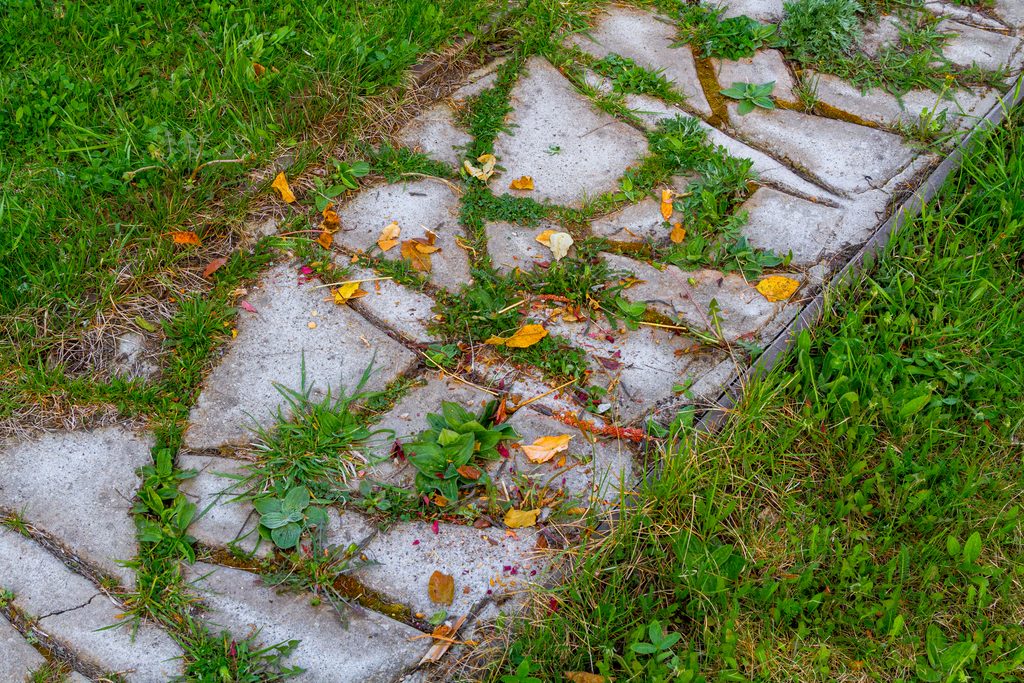
Weeds that return year after year are often more than an appearance problem. They may indicate thin turf, compacted soil, poor drainage, excessive shade or another condition that allows weeds to outcompete desirable grass.
For commercial properties in Greater Pittsburgh, fall provides an important opportunity to control existing weeds while improving the turf conditions that contribute to their return.
Perennial Weeds Remain Active in Fall
Dandelions, plantain, ground ivy and wild violets are perennial weeds. Unlike summer annuals, they survive from one year to the next through established roots or underground structures.
As temperatures cool, many perennial weeds begin moving energy from their leaves into their roots. This biological process can make fall an effective time for properly timed broadleaf weed management.
Correct identification still matters. Ground ivy and wild violets, for example, are more persistent than many common broadleaf weeds. Their spreading growth habits and established root systems often require an ongoing management plan rather than a single treatment.
Not Every Visible Weed Needs the Same Response
Crabgrass may still be highly visible in early fall, especially along sidewalks, parking lots and other warm pavement edges. However, crabgrass is a summer annual that dies after frost.
Attempting to eliminate mature crabgrass late in the season may provide limited long-term value. A better fall strategy is often to address the thin, open turf that allowed it to grow. Aeration, overseeding and appropriate turf care can improve density and leave fewer openings for crabgrass the following year.
Broadleaf weeds require a different approach because many can survive the winter and return in spring. Understanding the weed’s life cycle helps determine where fall efforts will have the greatest impact.
Recurring Weeds Can Reveal Property Conditions
Treating visible weeds without examining the surrounding landscape may only provide temporary improvement.
Common patterns can offer useful clues:
- Plantain may thrive in compacted, heavily traveled areas.
- Ground ivy often spreads through moist, shaded turf.
- Wild violets are common in thin turf beneath mature trees.
- Clover can become more noticeable where turf lacks density.
- Nutsedge may point to wet soil, poor drainage or an irrigation problem.
Correcting these underlying conditions can be just as important as controlling the weeds themselves. Depending on the site, improvement may involve relieving compaction, adjusting irrigation, addressing drainage, improving turf density or reconsidering whether grass is the best choice for a heavily shaded area.
Coordinate Weed Control With Fall Seeding
Fall is also the preferred season for aerating and overseeding many Pittsburgh-area lawns. However, weed-control products and new seed are not always compatible.
Applying the wrong product too close to seeding can interfere with germination or damage young turf. Any fall weed-control plan should be coordinated with scheduled aeration, overseeding and fertilization services.
Newly seeded areas also need consistent moisture. Supporting seed establishment helps create denser turf, which is one of the best long-term defenses against future weed pressure.
Build a Long-Term Weed Management Plan
A successful fall program should do more than remove what is visible. It should identify the weeds, evaluate why they are returning and determine how turf and site conditions can be improved.
JML Landscape helps commercial property managers throughout Greater Pittsburgh develop site-specific turf and fall weed control plans. Contact our team to schedule a property walkthrough and prepare your landscape for healthier growth next season.