
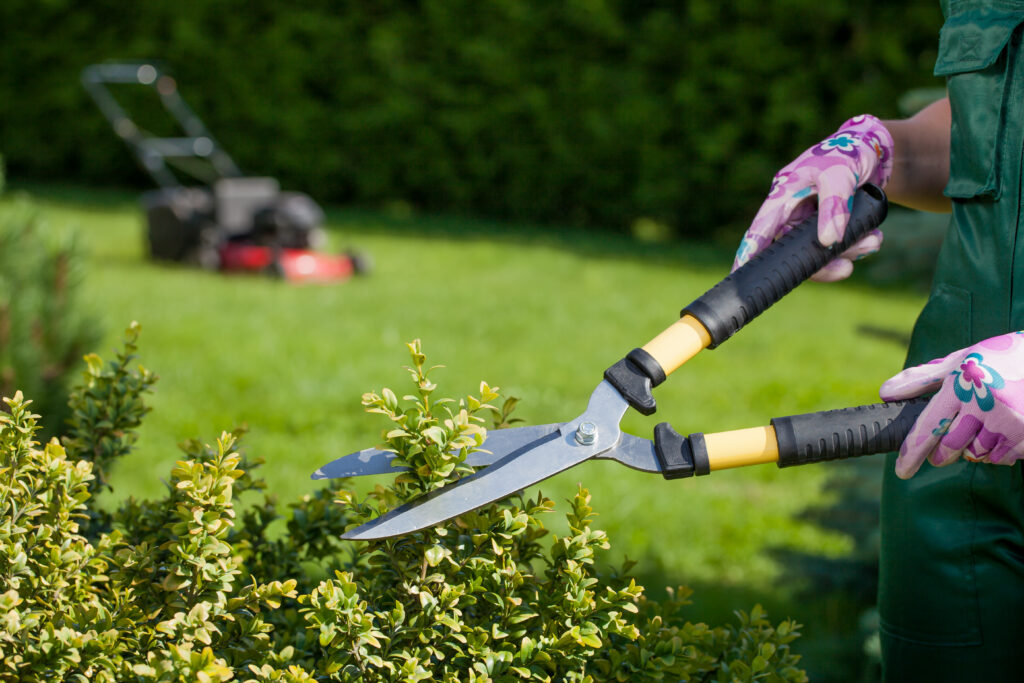
The shrubs were small when the homes were built. A few years later, they are covering the first floor windows, crowding the front walks, and generating emails to the HOA board. The request is usually simple: can the landscape crew just cut them in half?
It is a familiar problem in HOA communities. A plant can receive regular trimming and still outgrow the space where it was installed. Before making a major cut, it helps to understand whether the shrub needs a different pruning approach or a different location altogether.
Routine trimming only goes so far
Trimming manages the outer growth and keeps a plant looking tidy. Selective pruning works within the shrub, removing chosen branches to address crowding and improve its structure. Some shrubs can also benefit from renewal pruning, which removes older stems to encourage replacement growth.
These approaches serve different purposes. Repeatedly shearing the outside of an oversized shrub will not necessarily solve the underlying problem, and cutting every plant back by half can leave bare areas or damage plants that do not recover well from severe pruning.
Where dormant pruning can help
Once deciduous shrubs lose their leaves, their branching is easier to assess. Depending on the species, dormant pruning can help address crossing stems, crowded growth, and branches extending into windows or walkways. Late winter is often a useful window for this work, before new growth begins.
Timing still depends on the plant. Lilacs, azaleas, and many other spring flowering shrubs carry flower buds on existing growth. Winter pruning can remove those buds, so routine pruning is generally timed after flowering. An evergreen also cannot be treated like a deciduous shrub that responds well to renewal pruning.
When replacement makes more sense
If a shrub naturally matures above a window, pruning may offer only a temporary fix. The same complaint can return as the plant regrows. A smaller variety suited to the bed may be a better long term investment than repeatedly trying to keep an oversized plant within bounds.
For HOA boards, that decision also affects expectations. Residents should know whether the plan is selective pruning, gradual renewal, or replacement, and what the area will look like afterward. Some work improves the plant over time rather than producing an immediate finished appearance.
Put problem shrubs on the winter planning list
November is a good time to identify recurring trouble spots and discuss options before spring. JML Landscape Management can help your HOA or property management team review overgrown planting beds and determine where dormant pruning or replacement belongs in the plan. Start with the windows, walkways, and entrances that keep coming up in resident conversations.
Contact us today to get started!