
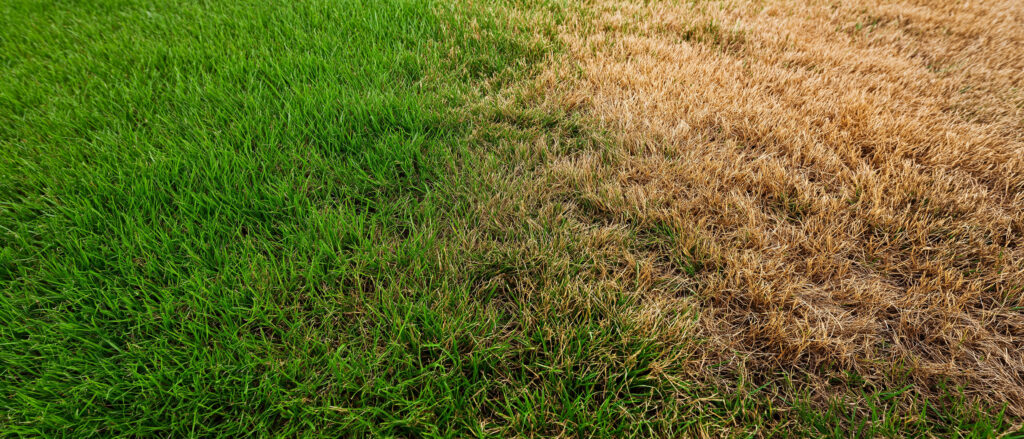
By August, many commercial lawns throughout the Greater Pittsburgh area begin to show signs of stress. Green turf may fade, thin areas can become more noticeable, and brown patches may appear seemingly overnight.
Summer heat is often blamed, but brown grass does not always mean the lawn simply needs more water. Several problems can look similar from a distance. Identifying the actual cause is the first step toward helping the turf recover and preventing further damage.
Summer Heat and Drought Stress
Most lawns in Western Pennsylvania contain cool-season grasses that grow best during the milder temperatures of spring and fall. When August brings prolonged heat and limited rainfall, these grasses may slow their growth or enter dormancy.
Dormant turf typically turns a relatively uniform tan or brown but may still be alive. It can often recover when temperatures cool and consistent moisture returns.
However, repeatedly walking, driving or placing equipment on drought-stressed turf can cause lasting damage. High-traffic areas around entrances, sidewalks and loading zones are especially vulnerable.
Uneven Irrigation Coverage
An irrigation system can be running regularly without watering the property evenly. Misaligned sprinkler heads, clogged nozzles, leaks and pressure problems may leave certain areas too dry while others receive too much water.
Signs of uneven coverage can include:
- Brown strips or sharply defined dry areas
- Green turf around individual sprinkler heads
- Water spraying onto pavement
- Puddling or consistently wet soil
- Turf declining in areas farthest from a sprinkler
Increasing the watering schedule may not solve the problem. It can overwater healthy sections while the original dry areas remain stressed. A system inspection can identify whether adjustments or repairs are needed.
Turf Disease
Warm weather, high humidity and extended periods of leaf moisture can create conditions for lawn diseases. Brown patch and summer patch may cause thinning, discoloration or irregular brown areas that resemble drought damage.
Watering at the wrong time can make these problems worse. Irrigating late in the day may leave grass blades wet overnight, giving certain diseases more time to develop.
Because turf diseases can resemble heat stress, applying additional water or fertilizer without a proper diagnosis may intensify the damage.
Insect Damage
White grubs, sod webworms and other turf-damaging insects may become noticeable during late summer. These pests feed on grass blades or roots, weakening the lawn and creating brown or thinning areas.
Turf damaged by grubs may feel loose and lift from the soil because the roots have been eaten. Other insects may cause irregular patches or areas that continue expanding despite adequate moisture.
Not every insect found in the lawn requires treatment. The type of pest, extent of activity and amount of damage should all be evaluated before deciding what action to take.
Compacted Soil and Heavy Traffic
Commercial properties experience regular foot traffic, service vehicles, deliveries and equipment use. Over time, this activity can compact the soil.
Compacted soil limits the movement of air, water and nutrients into the root zone. Turf growing in these conditions often develops shallow roots and struggles more during summer heat.
If brown areas consistently appear along walkways, entrances or other heavily used sections, soil compaction may be contributing to the problem. Core aeration and overseeding are often planned for late summer or early fall to improve soil conditions and rebuild thin turf.
What Should Property Managers Do Next?
Avoid assuming every brown area has the same cause. Start by reviewing the lawn’s watering patterns, soil moisture, traffic levels and the shape and location of the damage.
A late-summer property walkthrough can help identify:
- Areas that are temporarily dormant
- Irrigation coverage or drainage problems
- Possible disease or insect activity
- Thin turf caused by shade or compaction
- Sections that may need aeration, overseeding or renovation
August is also an important time to begin planning fall turf work. Waiting until well into October may reduce the time new grass has to establish before colder weather arrives.
At JML Landscape, we evaluate the entire property rather than treating brown turf as a single problem. By identifying the underlying cause and creating a practical recovery plan, property managers can make informed decisions that support a healthier, more consistent landscape. Contact us today to schedule a professional property walkthrough.